Posts Tagged ‘happy people’
 How are your New Year’s Resolutions doing? Are you happy with your progress?
Eager excitement and anticipation blaze in our New Year’s celebrations.
We are determined to make this year much better than the last which just gratefully passed.
Now, barely several weeks into the New Year, many of us feel the Gnawing Nags of Negativity signaling New Years Resolution Remorse.
We have not done and are not doing all of the things we were so enthusiastically determined to do.
The power of habits, inertia and the demands of life seem to be dragging us back into the same ruts we wanted to escape. So what do we do?
Here are a few key Happiness Habits to help you redouble your determination and desire to achieve your New Year’s goals and aspirations:
Don’t Beat Yourself Up – Criticizing and castigating yourself is damaging, demoralizing and very counterproductive. We do it because as children, adults punished us in efforts to improve our behavior, so we do it to ourselves thinking it will make us better. It doesn’t, it defeats us.
Expect Lapses and Plan for Them – Many successful personal development programs grow in fits and starts with great leaps forward alternating with relapses backwards. The key is to learn how to handle your relapses well.
Failure Is NOT Falling Down, It’s Staying Down – Giving up because you made a goof or series of goofs is a grievous condemnation and limitation on your future performance. Successful people make mistakes, they are also determined not be defeated by them.
Misery Is Meant To Make Us Move – Those Gnawing Nags of Remorse and Negativity are a powerful, helpful signs you are slipping back into patterns and behaviors you resolved to avoid. Say “Thank you Resolution Remorse, you are reminding me and reinforcing my resolve to achieve my goals.”
Redouble Your Determination, Drive and Desire – Your dreams haven’t changed, you are just disappointed in your recent actions to attain them. This doesn’t mean you can’t do it. Reinforce your resolve to work hard to achieve your goals.
Drive Discipline With Desire – Don’t view discipline as deprivation, see discipline as steps to dream realization. The secret to successful discipline is to always desire something positive more than whatever tempts you. Fire up and redouble your desire to achieve your goals.
See Small, Very Specific Steps To Success – Start small, construct your process as a series of small, very specific steps that lead to dream fulfillment. Continually celebrating successful completion of each step sets you up for a series of successes.
Lapses Mean You Have To Work Even Harder – Make up for your mistakes and work hard to catch up and stay on track.
Continually Recall And Reinforce Your Resolve – Remember and relive the feelings that lead to your resolution. Continually reinforce your desire and determination, rekindle your resolve to achieve your dream.
Happy New Year from Michele Moore and the Happiness Habit Team!
Copyright 1999- , Michele Moore. All Rights Reserved. Explore HappinessHabit.com and HappinessBlog.com. Our materials may NOT be published, broadcast, redistributed or rewritten without written permission from the authors. Photograph from Dreamstime.com
Tags:happiness habit, happiness secrets, happy life, happy people, michele moore, new years resolution remorse
Posted in Happiness Notes | 1 Comment »

Stabs of self pity strike suddenly from time to time.
All we see are the wrongs, the inequities and the dreadful damage our difficulties have caused us.
A overwhelming surge of painful, debilitating self pity begins to set in.
Don’t let self pity overwhelm or over power you.
Stop Self Pity Before It Grows And Deepens
Don’t give those negative, debilitating thoughts and feelings any time and attention, all they will do is bring you down. They are non productive, unnecessary and dangerous. Self pity sabotages happiness and brings dreadful, dismal, downward spirals of despair.
Revolt and Rebel Against Self Pity
Refuse To Give Those Painful Thoughts Your Time And Attention
Self Pity SOS – Let self pity’s first twinges serve as an SOS to immediately redirect your thoughts, actions, energy and attention toward positive goals, activities and objectives that will help you to be happy and spiritually successful.
Don’t Let Self Pity Down Your Spirits
Don’t Give Self Pity Your Time or Attention
Negative judgments power all fear, emotional pain, anxiety and despair. Self pity is a super charged negative judgment.
The normal response is to ask, can these negative judgments help me in some way? If the answer is YES, turn the negative judgments into a series of positive action items and constructive steps that build happiness and spiritual success.
“I’m going to be late!” is an anxiety producing negative judgment that can help you if you turn it into a series of positive actions items: I will stop what I am doing, watch the clock carefully, collect my things and get ready to walk out the door at least three minutes early.
If the answer is NO, discard the negative judgments and refocus your time and attention on activities that will help you achieve your goals, be happy and spiritually successful. The negative judgments are making you miserable for no reason.
Stabs of self pity signal an immediate jump to this NO response. Self pity rarely contains any positive action items that can help you to triumph and be happy. Feeling sorry for yourself is debilitating, dismal and no fun. Stop it before it grows and deepens.
When Stabs Of Self Pity Strike, Immediate Redirect Your Thoughts And Attention Toward Positive, Exciting, Encouraging Thoughts, Actions And Activities That Will Help You Succeed And Be Happy.
Copyright 1999- , Michele Moore. All Rights Reserved. Explore HappinessHabit.com and HappinessBlog.com. Our materials may NOT be published, broadcast, redistributed or rewritten without written permission from the authors. Photograph from Dreamstime.com
Tags:happiness habit, happiness secret, happy life, happy people, michele moore
Posted in Happiness Notes | No Comments »

A spirit of revolt and rebellion is important to happiness in normal times, it is especially important during difficult times.
Revolt and rebel against giving bad things and difficult people control of your feelings.
Don’t help them hurt you.
Don’t let them get you down, upset you or steal your time and attention.
Revolt and Rebel against giving them control of your feelings.
We are truly at our best and able to perform our best when we are Up, confident, energized, enthusiastic and happy. We want to continually try to be at our best so we can perform our best.
We don’t want to let bad circumstances or difficult people distract or detract from our ability to do well.
Continually Trying To Do Your Best, Feel Your Best And Be At Your Best Is A Key Happiness Habit.
Habitually happy people don’t like to hand control of their thoughts, actions or feelings over to people or circumstances that distress, depress, distract or demoralize them. They like to remain emotionally independent and spiritually free.
They revolt and rebel against giving bad things control of their feelings. They use pleasant experiences, interactions and people to elevate their feelings but they don’t let bad thing tear them down.
If you allow some jerk to make you angry, you have given then control of your feelings. You are allowing then to steal your time, your attention and your emotional well-being.
Instead, simply say to yourself, “I am NOT giving you control of my feelings. I am NOT giving you the power to hurt me. I will deal with you at a time and place that is good for me. I am not going to allow you to distract, distress, depress or demoralize me.” This is a learned skill that gets more powerful with practice.
It’s important to emphasize this does not mean revolt and rebel against the situation itself, which may or may not be a good idea. We often have to be conciliatory and comply in order to survive and succeed. It does mean not giving bad things the power to hurt you. See Happiness In Hard Times – Revolt and Rebel for more insights.
Revolt and rebel against giving bad things and difficult people control of your feelings. Don’t let them get you down, distract, depress or upset you or steal your time and attention.
Refocus your time and attention on activities that will help you to succeed, be happy and do well.
Copyright 1999- , Michele Moore. All Rights Reserved. Explore HappinessHabit.com and HappinessBlog.com. Our materials may NOT be published, broadcast, redistributed or rewritten without written permission from the authors. Photograph from Dreamstime.com
Tags:happiness habits, happy life, happy people, michele moore
Posted in Happiness Notes | 1 Comment »

When you are feeling overwhelmed and over powered by all the things you have to do, how can you stay sane, focused, balanced, confident, effective and happy?
Break Important Tasks Down Into Small, Specific Steps or Sections That Are Easy To Visualize And Achieve During A Short, Definite Period of Time.
Work As Hard As You Can, Complete That Step. Stop And Celebrate Success.
Assess your progress in terms of your larger goals and the time you have to attain them. Decide what to do next and how long you will spend on it.
Work as hard as you can, complete that step, stop, celebrate success, assess your progress and plan your next steps.
Great Achievements Are Built Through A Series of Very Small, Specific, Successful Steps.
If You Still Feel Overwhelmed, Break The Step Down Into Even Smaller, Shorter, Easy To Visualize And Achieve Steps or Actions.
Working Hard Is Energizing And Empowering – It Incites A Delight And Drive To Get Things Done. Urgency creates energy, determination, drive, decisiveness and focus. See work as an exciting series of successful achievements leading to valued goals, not a dreadful burden.
If You Can’t Face Getting Up And Moving – Take a couple of long, slow deep breaths. With each deep breath, feel energy coming into your body and radiating outward with each exhale. Smile confidently. Swing your legs around, take another deep, energizing breath, stand up confidently and smile.
Ask yourself, What Are You Going To Explore, Enjoy & Experience? What Are You Going To Appreciate & Achieve? What Are You Going To Accomplish So You Feel Good At The End Of The Day?
Priorities Are Key. Identify What Is Truly Most Important And Work On That Task. Don’t get distracted by busy work that allows you to avoid addressing important goals.
Planning Previews Success – Think carefully about what you want to achieve and the time and resources you have to accomplish it. Planning is a preview of your success.
Make Planning Previews Part Of Your Project’s Process.
Avoid The Fault Finding Feel Goods, Turn Negative Judgments Into Positive Actions and Avoid All UnNecessary, NonProductive Negativity.
You Will Feel Much Better And More Confident.
Copyright 1999- , Michele Moore. All Rights Reserved. Links to our website and pages are welcomed! Please note our materials may NOT be published, broadcast, redistributed or rewritten without written permission from the authors. Explore HappinessHabit.com for more happiness quotes and insights.
Tags:happiness habit, happiness secrets, happy life, happy people, michele moore
Posted in Happiness Notes, Happiness Quotes | 1 Comment »
 Disasters and deep disappointments are an inevitable part of life. Here are secrets to bouncing back quickly and powerfully:
Focus on Fixes – Ask yourself, what can you do to correct the problem, ensure it doesn’t happen again, gain from your pain, learn, grow, strengthen your skills and power to build happiness and future success?
Don’t Beat Yourself Up, Blame, Complain or Criticize! Focusing on where you are now and what’s wrong keeps you stuck in the problem and misery. Focusing on what you want to do differently and where you want to go in the future helps you to grow and achieve it.
We don’t feel better by blaming, beating ourselves up or by focusing on problems. Beating ourselves up reinforces errors we want to avoid. It focuses time and attention on what’s wrong, not on building new skills and strategies that bring happiness and future success.
We Bounce Back by embracing our goals, our Best Selves and by focusing on what we want to achieve and do differently and then working hard to attain it.
Turn Anguish Into Achievement – Turn anger, regret and anguish into positive actions that improve the situation and help you to be happy and more effective in the future.
Worrying about problems is very different from solving or resolving problems. Regret and remorse do not always cause reform. Desire and Determination To Do Things Differently Bring Positive Change.
Ask yourself, Is being upset helping me to fix the problem or to be more effective in the future? How long do I want to be upset? How miserable do I want to be and for how long?
Rebounding Rapidly: Think about how will you feel when the problem is behind you, when you have successfully rebounded. Visualize yourself successfully recovered from the problem. Feel those powerful positive feelings, embrace and project them. Practice feeling and being in rebound mode until it becomes habit.
We Can Rebound More Quickly By Focusing On How We Will Feel When We Have Rebounded From The Difficulty And Then Consciously Taking On Those Attitudes And Perspectives. Bad things happen but they don’t have to make you miserable for long.
Our Best: We are truly at our best and able to perform our best when we are UP, confident, energized, focused and happy. Don’t tear yourself down, distract or distress yourself. Don’t detract from your ability to excel and do well.
See Yourself At Your Best, Feel Those Powerful, Confident Feelings And Project Them. They Will Become Genuinely Yours. More Bouncing Back
Copyright 1999- , Michele Moore. All Rights Reserved. Links to our website and pages are welcomed! Please note our materials may NOT be published, broadcast, redistributed or rewritten without written permission from the authors. Explore HappinessHabit.com and HappinessBlog.com for more happiness insights.
Tags:happiness habit, happiness secret, happy life, happy people, michele moore
Posted in Happiness Notes, Happiness Quotes | 3 Comments »
 We are at our best and able to perform our best when we are Up, energized, enthusiastic and happy.
Habitually Happy People try to have a good time all of the time. They know this is the best way to perform well.
Summoning up energy, enthusiasm and determination to complete tasks well is just as important as defining good plans.
Decide what you are going to do and find ways to make work enjoyable, rewarding and meaningful. Fuel your life and your work with fun. When you make work fun you never have to toil again.
Loving your work, taking pride in what you do and finding ways to make it fun and fulfilling makes work flow effectively and efficiently.
“Ridiculous” cry critics, “You can’t expect to have fun and a good time all of the time!”
“I can!” Habitually Happy people reply, or “I can try.” “With an attitude like that you’ll never be truly happy!”
Habitually Happy People try to get the most from every moment, they try to have a good time all of the time. Because they try to find ways to enjoy life and work, they generally do.
They don’t allow themselves to waste time in self pity or in making their own misery. “Time spent in a down mood is time wasted” one happy person commented.
“You can choose your mood and attitude,” another happy person said, “I choose to try to be happy and feel good almost all of the time.”
They creatively reinvent tasks to make them fun, challenging and rewarding. They don’t tolerate down, distressed or dismal moods for long.
You Never Feel Better By Focusing On How Badly You Feel.
Explore, Enjoy And Employ Skills And Strategies Used By Habitually Happy People And Become Happier Yourself.
Make Happiness YOUR Habit!
Copyright 1999- , Michele Moore. All Rights Reserved. Links to our website and pages are welcomed! Please note our materials may NOT be published, broadcast, redistributed or rewritten without written permission from the authors. Explore HappinessHabit.com and HappinessBlog.com for more happiness insights.
Tags:happiness habits, happiness secrets, happy life, happy people, michele moore
Posted in Happiness Notes | 4 Comments »
 Of Course Not! All the Habitually Happy people we interviewed and studied said they experienced sadness, grief, distress, regret and various forms of mental malaise just like the rest of us.
Habitually Happy people are not immune to difficulties, they are not unfeeling, they are not unrealistically happy during devastating disasters, death or difficult times.
The all report occasional unexplained down times, dismal drearies, sadness for no reason. They generally bounce back quickly and report unexplained sadness often clears within a day.
Habitually Happy People are masters of using the power of love, positive expressions and enthusiastic feelings to buoy their spirits and to energize and encourage people around them. They know how to make the very best out of difficult circumstances.
Since they consciously try to enjoy, appreciate and have a good time all the time, they generally do. This shortens and lessens their periods of sadness.
Remember, Depression Is A Big Business. A great deal of money is made from misery, misinformation and manipulation. Beware of falling into its marketing trap.
Here are some key Happiness Habit® insights that can help:
The First Law Of Happiness: Our Focus Determines Our Feelings. Focusing our time and attention on bad things makes us feel sad, angry, worried or distressed. Shifting our attention to good things makes us feel energized, excited and enthusiastic.
Moving from problems to positive, possible solutions usually makes everyone feel much better.
Focusing On Doing Good Things Makes Us Feel Good.
Whatever We Focus Our Minds On
Expands In Our Experience.
We Never Feel Better Focusing On How Badly We Feel.
Exercising Excites Energy And Enthusiasm. Get Moving!
Action, Activity & Achievement Are Energizing, Encouraging, Empowering.
Take Positive Steps To Shake Off Sadness.
Copyright 1999- , Michele Moore. All Rights Reserved. Links to our website and pages are welcomed! Please note our materials may NOT be published, broadcast, redistributed or rewritten without written permission from the authors. Explore HappinessHabit.com and HappinessBlog.com for more happiness insights.
Tags:happiness habits, happiness secrets, happy life, happy people, michele moore
Posted in Happiness Notes | 4 Comments »
 To be happy, practice doing YOUR best, feeling YOUR best and being YOUR best self all of the time.
This helps you feel your best.
It illustrates The First Law of Happiness: Our Focus Determines Our Feelings.
When we focus on things we think are bad, we feel sad, angry, anxious or depressed. Shifting our attention to good things makes us feel energized, excited and enthusiastic.
Make it your goal to do YOUR best, feel YOUR best and be YOUR best all of the time.
It’s important to emphasize it’s YOUR best and not someone else’s best. How do we do this?
We all occasionally enjoy special, magical days when we are feeling, thinking and performing at our very best.
Remember those days in vivid detail. Recall how you felt, acted and thought. Describe it in clear, specific detail. People often say…
“My mind is alert, sharp, focused, I am able to concentrate very well. A relaxed powerful energy is flowing through my body. My spirit seems to soar with joy. My concentration is intense without my body feeling tense.”
Remember one of those special days, recall your thoughts and feelings. Feel the rhythm and beat of that marvelous, positive energy flowing through your body. Connect with those feelings and take them on for yourself. Project them and they will be yours.
You can’t be at your best while thinking about how badly you feel!
See yourself performing YOUR best, feeling YOUR best and thinking YOUR best. Feel those feelings, step into that zone, project those feelings and they will be genuinely yours.
You can now be at your best whenever you wish!
It’s a great way to be happy.
Copyright 1999- , Michele Moore. All Rights Reserved. Links to our website and pages are welcomed! Please note our materials may NOT be published, broadcast, redistributed or rewritten without written permission from the authors. Explore HappinessHabit.com and HappinessBlog.com for more happiness insights.
Tags:happiness habits, happiness secrets, happy life, happy people, michele moore
Posted in Happiness Notes | No Comments »
 Don’t Beat Yourself UP!
You Have To Be At Your Best To Perform Your Best.
Tearing Yourself Down Is Distracting, It Destroys Your Confidence And Detracts From Your Ability To Do Well.
Beating Yourself Up is very counterproductive.
You’re spending all your time, energy and attention focusing on what went wrong and how terrible it is and then you are burning it into your memory with lots of negative energy.
No time or attention is spent on identifying, learning and strengthening skills and strategies that will help you avoid the error in the future and build success and happiness.
Why do we Beat Ourselves Up?
When we were little, parents and authority figures may have punished us to protect us from the dangers of wrongdoing.
If we ran into a busy street without looking, we may have received a spank on the rump to discourage us from doing it again.
Punishment Causes Pain And Pain Prompts Avoidance.
What we really need to learn is to recognize there is danger, stop, look carefully both ways before we cross a busy street. Beating yourself up doesn’t teach the skills we need to survive and be safe and successful in the future.
On some level we also may have learned the wrong lesson, that beating ourselves up is the way to improve our performance and make ourselves better – so we do it to ourselves.
By focusing on where we are and what’s we did wrong we stay stuck. We reinforce our errors by rehearsing and reliving them in our minds
Beating Yourself Up Reinforces Errors You Want To Avoid.
Remorse and Regret do not necessarily bring Reform.
By focusing on where we want to go and what we want to do differently in the future, we grow.
Channel Anger And Anguish Over Errors And Mistakes Toward Fixing Problems And Identifying And Practicing Skills That Will Make You Successful And Happy In The Future.
Copyright 1999- , Michele Moore. All Rights Reserved. Links to our website and pages are welcomed! Please note our materials may NOT be published, broadcast, redistributed or rewritten without written permission from the authors. Explore HappinessHabit.com for more happiness quotes and insights.
Tags:happiness habits, happiness secrets, happy life, happy people, michele moore
Posted in Happiness News, Happiness Notes, Happiness Quotes | No Comments »
The Fault Finding Feel Goods are one of the biggest barriers to happiness and spiritual success. Avoid them if you want to be happy.
What are the Fault Finding Feel Goods?
The Fault Finding Feel Goods are all those terribly tempting tendencies to criticize, blame, complain or judge to elevate ourselves and our self esteem. 
The Fault Finding Feel Goods make us feel good on some level by putting other things or other people down.
The problem is that we’re focusing on negatives and that’s not the way to happiness or to spiritual success!
Since we feel good by complaining about what is wrong, we have no vested interest in trying to help improve it or change it.
This means we tend to stay stuck in our negativity and to continue wallowing in wrongs.
The Fault Finding Feel Goods take many forms… blame, complaints, judgmental criticism, ridicule and bigotry.
Have you ever met a critic who seemed really happy? Their primary source of joy is putting something or someone else down.
Recognize and Reject the Fault Finding Feel Goods if you want to be happy and spiritually successful.
Refocus your time and attention on positive, inspiring thoughts and actions that will help you to achieve, succeed and be happy.
Copyright 1999- , Michele Moore. All Rights Reserved. Links to our website and pages are welcomed! Please note our materials may NOT be published, broadcast, redistributed or rewritten without written permission from the authors. Explore HappinessHabit.com and HappinessBlog.com for more happiness insights.
Tags:happiness habits, happiness secrets, happy life, happy people, michele moore
Posted in Happiness Notes | No Comments »
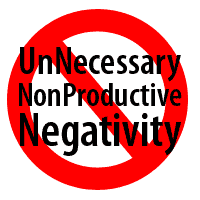 Huge increases in happiness come from simply deciding to avoid all unnecessary, non-productive negativity.
If the negativity is unnecessary and non-productive, resolve to avoid it.
Don’t give it your time and attention. Don’t repeatedly replay it in your mind.
Let it go. Focus on positive, productive activities and aspirations.
Sometimes you cannot physically escape. A boss, parent, loved one or authority figure may have the power to keep you there.
Listen, learn all you can but decide to be unaffected. Don’t give them the power to hurt you.
Smile, nod very nicely in bobble headed agreement while your thoughts and attention are focused on positive and productive activities far away.
Avoiding The Fault Finding Feel Goods and All UnNecessary, Non-Productive Negativity are powerful prescriptions for happiness and spiritual well being.
Copyright 1999- , Michele Moore. All Rights Reserved. Links to our website and pages are welcomed! Please note our materials may NOT be published, broadcast, redistributed or rewritten without written permission from the authors. Explore HappinessHabit.com and HappinessBlog.com for more happiness insights
Tags:happiness habits, happiness secrets, happy life, happy people, michele moore
Posted in Happiness Notes | No Comments »
When we are stressed and overwrought, it’s easy to loose sight of all the beauty and goodness that continually surrounds us.
Stop and spend time SEAing, Savoring, Enjoying and Appreciating simple pleasures that bring joy and happiness.
Deciding to use pleasant, enjoyable experiences to raise your spirits and refusing to let negative forces to drag you down is an important key to happiness.
 Savor Pleasing Sensations – warm sunshine on your face, a soft breeze on your skin, the taste of a favorite tea.
Enjoy Pleasant Experiences – great music, a brisk walk, a warm shower, working hard on valued activities, a good book.
Appreciate Activities that bring joy – admiring achievements, a beautiful sunset, acts of kindness, generosity and compassion.
Whenever you notice something wonderful or beautiful, resolve to spend a few special extra moments SEAing it too, Savoring, Enjoying and Appreciating its goodness to lift your spirits.
It’s a technique that elevates your mood and super charges your well-being whenever you need it.
Nothing around to Savor, Enjoy or Appreciate?
Recall and relive those special times when you felt absolutely marvelous. Use those memories to brighten your mood, energize, and expand your appreciation of the pleasant things in life.
Remember the energy and enthusiasm of an exciting day, the warmth of tender moments or the wonderful rubbery feelings of relaxation when you need to calm down.
Use pleasant experience in the present and in memories to brighten your mood whenever you wish.
When you SEE something wonderful, spend a few extra seconds Savoring, Enjoying & Appreciating, SEAing it too. It builds happiness.
Copyright 1999- , Michele Moore. All Rights Reserved. Links to our website and pages are welcomed! Please note our materials may NOT be published, broadcast, redistributed or rewritten without written permission from the authors. Explore HappinessHabit.com and HappinessBlog.com for more happiness quotes.
Tags:happiness habits, happiness secrets, happy life, happy people, michele moore
Posted in Happiness Notes | No Comments »
 Everyone has dangerous, deranged thoughts from time to time, even the happiest, most admirable, sane and stable people among us.
Dangerous, deranged thoughts can drive us crazy and do us great harm if we do not deal with them quickly, dramatically and effectively.
The Key to Happiness and Spiritual Success Is to Immediately RECOGNIZE Dangerous, Deranged Thoughts for What They Really Are, RAPIDLY REJECT Them and Immediately REDIRECT ATTENTION To Positive Thoughts, Actions and Objectives.
Don’t give dangerous, deranged thoughts time and attention to take hold. It’s always easier to step out of a shallow spot than having to climb out of a deep hole.
The Happiness Habit “Practice Being The Person You Want To Be” Is a Powerful, Positive Protector.
When you encounter bad, dangerous deranged thinking, immediately reject it and redirect your attention to answering the question, “How would the person I want to be think, act and feel, what would they do?”
Visualize yourself as the person you want to be, take on their perspectives and persona and “Practice Being The Person You Want To Be.” It’s that simple!
What are dangerous and deranged thoughts? Thoughts that are illegal, harmful or detrimental to your health and well-being or hurtful to others.
This illustrates The Three Fundamental Truths that are the Foundation of the Happiness Habit:
1) The most important decision we make on a moment to moment basis is where we focus our time and attention. The sum of these decisions is our life.
2) Whatever we focus our minds upon expands in our consciousness. Whatever we give time and attention to grows in our reality.
3) Thoughts have consequences just like actions have consequences. Beware of the Consequences of Your Thoughts is just an important warning as Beware of the Consequences of Your Actions!
Try it the next time you are hit with a dangerous, deranged thought.
Recognize and Reject Dangerous, Deranged Thoughts and Redirect Your Attention To Positive Activities and Objectives.
Copyright 1999- , Michele Moore. All Rights Reserved. Links to our website and pages are welcomed! Please note our materials may NOT be published, broadcast, redistributed or rewritten without written permission from the authors. Explore HappinessHabit.com and HappinessBlog.com for more happiness insights.
Tags:happiness habits, happiness secrets, happy life, happy people, michele moore
Posted in Happiness Notes, Happiness Quotes | 1 Comment »

Criticism And Control Occur So Frequently Together They Are Practically Synonymous.
Criticism Is Almost Always A Power Play.
People criticize to try to assert their superiority, power and to gain control of people, situations and interactions.
Critics assert control by planting doubts and disparaging or damaging ideas in people’s minds. They may or may not be factually correct or beneficial.
Criticism Is Corrosive.
Criticism leaves people deflated, demoralized, confused and uncertain about what they should do. That’s often the critic’s intent. Critics like to leave people feeling badly and powerless, that’s how they exert power and control.
If you can get a person to doubt themselves, their ideas or their abilities, it’s easier to control them, dominate them or at least get them to defer to your desires.
Doubt is often all you need to dominate and dissuade others from differing with you.
Criticism Is Counterproductive.
Criticism focuses on what’s bad, wrong or unattractive.
Calling something is bad does not describe what is good. Saying something is wrong does not express what is right or desirable. Describing what you don’t want does not not communicate what you do want.
Criticism only helps to the extent it expresses what to avoid. Criticism does NOT present clear descriptions of successful solutions, strategies or what you can do to improve.
Criticism Is Often A Deliberate Distraction – Critics criticize to derail other people’s success. Deflecting or dealing with criticism takes time, energy, attention and resources from positive, important activities. It’s easy to find yourself worrying about what critics say is wrong rather than focusing on what is truly important to you.
Focus On What You Want To Achieve, Articulate Benefits.
Habitually Happy people focus on what they want to achieve. They can describe why it is desirable, beneficial or attractive. Clear goals help define the steps to attain them.
They spend just enough time with wrongs so they can rapidly recognize and reject bad things. They then redirect their attention, energy and enthusiasm to positive activities that help them build happiness and spiritual success.
Focusing on why they are working and striving for their goals reinforces their desire and drive to achieve them.
Recognize Criticism for What It Usually Is – A Corrosive, Counterproductive Power Play.
Treat criticism like any other Negative Judgment: Ask can it help me in some way? If YES, turn those negative judgments into positive action items. If NO, don’t give critics your time, attention or concern.
Focus On What You Want To Achieve.
Enjoy Your Progress And Eventual Success.
Copyright 1999- , Michele Moore. All Rights Reserved. Explore HappinessHabit.com and HappinessBlog.com. Our materials may NOT be published, broadcast, redistributed or rewritten without written permission from the authors. Photograph from Dreamstime.com
Tags:criticism control, happiness habit, happiness secret, happy life, happy people, michele moore
Posted in Happiness Notes | No Comments »

The Light of a Single Candle
Is Not Diminished By
Lighting a Thousand More.
This is also true of happiness.
Happiness is not diminished by sharing it.
If we decide to summon up a genuine sense of joy and honest appreciation and then continually project it, we can’t help but take on a more positive mood ourselves.
Our Focus Determines Our Feelings. It’s the First Law of Happiness. By focusing our time and attention on projecting good things we feel good. We may easily brighten someone else’s day as well.
We’re not trying to manipulate people’s moods or make people happy.
We’re simply trying to touch the people we meet with a positive spirit, an honest, enthusiastic smile and genuine appreciation…
A smile and a warm “Good morning” or an unexpected “Enjoy a beautiful evening.”
A heartfelt hello and smile for the lady who hands you coffee in the morning, the bus driver, the toll taker, the men on the sanitation trucks. Everyone you meet.
Imagine what would happen if we all decided to end our aloof, reserved indifference by radiating a genuine sense of warmth? If strangers smiled and acknowledged us as we greeted them the same way?
A single second of shared joy and appreciation to warm our moment as we pass by to enjoy our day.
What would happen if everyone decided to do it? Even for just a day? Would we keep it going and make it a habit?
Some people will scowl and shrink away and that’s okay. We have already brightened our own moment and we’re not allowing them to darken our day. They are the people who need a bright smile and a warm greeting the most.
What would happen if we all decided to do it even for just a day?
We would be much happier, our day much warmer, the world more joyful. We wouldn’t want to stop.
When shall we try it?
Copyright 1999- , Michele Moore. All Rights Reserved. Links to our website and pages are welcomed! Please note our materials may NOT be published, broadcast, redistributed or rewritten without written permission from the authors. Explore HappinessHabit.com and HappinessBlog.com for more happiness insights.
Tags:happiness habits, happiness secrets, happy day, happy people, michele moore
Posted in Happiness Quotes | No Comments »
 We all know a few special people who always seem to be truly UP, energized and happy. They light up a room and our lives with their presence.
They seem to be having a good time all of the time and continually radiate genuine joy.
They are very loving people. They love life, they love what they do and they love the people around them, they love themselves.
They live without prejudices and embrace the entire world eagerly.
They have high integrity. We trust, admire and respect them.
They are good decision makers and leaders.
They are high achievers who love creative challenges.
They always enthusiastically try to do their best, be their best and encourage others to be their best too.
They refuse to let difficulties or problems distress or bother them.
When they are down, it never seems to last for long.
Enthusiasm, Energy, Achievement, Integrity, Happiness and Joy Characterize Their Lives.
You know some of these special people. They are not the most prominent or powerful people we know but they certainly are the happiest. We may wish we knew how to be more like them.
Happiness Habit interviewed and studied Habitually Happy, genuinely joyous people from all different walks of life and life situations. We identified the key Values, Beliefs, Habits, Ideals and Boundaries characteristic of happy thought. We call these special qualities Happiness Habits.
If you choose to adopt and practice Happiness Habits, you too will become happy or happier despite what is happening to you and around you.
Explore and Enjoy HappinessHabit.com, HappinessBlog.com and HappinessInHardTimes.com Comment on our postings. Share your thoughts and insights.
Wishing you great happiness and spiritual success,
Michele Moore and the Happiness Habit® Team
Copyright 1999- , Michele Moore. All Rights Reserved. Links to our website and pages are welcomed! Please note our materials may NOT be published, broadcast, redistributed or rewritten without written permission from the authors. Explore HappinessHabit.com and HappinessBlog.com for more happiness insights.
Tags:habitually happy, happiness habit, happiness secrets, happy life, happy people, michele moore
Posted in Happiness Notes | 2 Comments »
 Over a period of several years, Happiness Habit interviewed and studied habitually happy, genuinely joyous people from many different walks of life and personal situations.
We studied and interviewed people who were cheerfully facing terminal illnesses, job losses and major life challenges.
We intentionally omitted people who seemed happy primarily because of success or good things happening to them, what we term “situational happiness”.
We wanted to answer the question, “What can we do to be happier?” given who we are and the challenges we face.
Our goal was to identify and articulate the key values, beliefs, ideals, habits and boundaries that lead to happiness and spiritual success and explain why they work so well.
We call these key qualities Happiness Habits.
Experience has shown that when people consciously choose to adopt and practice Happiness Habits they become happy or happier despite what is happening to them or around them.
Our mission is to share these key happiness skills summarized in simple statements what we call Coaching Credos that are easy to recall and apply.
If Happiness Habit® concepts are:
1) Consistent with what most people know and believe to be true about happiness. You decide.
2) Consistent with the best current scientific and academic research. They are.
3) Effective, actually help people live happier more spiritually successful lives. You decide.
Then the validity of our approach is proven.
what do you have to loose? Why not give it a try?
Explore and enjoy our Happiness Habit websites and decide for yourself!
Copyright 1999- , Michele Moore. All Rights Reserved. Links to our website and pages are welcomed! Please note our materials may NOT be published, broadcast, redistributed or rewritten without written permission from the authors. Explore HappinessHabit.com and HappinessBlog.com for more happiness quotes and insights.
Tags:happiness habit, happiness research, happiness secrets, happy life, happy people, michele moore
Posted in Happiness Notes | No Comments »
We’re often asked how trying to do your best brings happiness…
Habitually Happy People Continually Try To Do Their Best, Feel Their Best, Be Their Best All Of The Time. Their Best keeps getting better.
It’s a direct application of The First Law of Happiness: Our Focus Determines Our Feelings. When we focus our attention on things we find bad, we feel sad, angry or anxious.
When We Think About Good Things We Feel Elevated, Excited, Energized. Our Focus Of Attention Determines Our Feelings.
If you’ve ever had a mediocre day when you just didn’t feel like putting forth a good effort and didn’t, you know the truth of this phrase.

When we don’t bother to try to do a good job and get only mediocre results, we feel pretty mediocre too.
Habitually Happy people continually energize themselves with thoughts of themselves doing their best at whatever it is they are doing.
Clear Goals Help Define The Steps To Attain Them.
Because they are thinking about doing well, they are able to do well and they feel well. Thinking about doing YOUR best provides a path to continually improve your performance.
The Key Word Here Is YOUR Best, Not Someone Else’s Best.
Learn all you can from other people’s superb performances and then try to do YOUR best. It’s the best you can realistically do.
Comparisons to superior star performers are often purposeless and painful for no reason. What good does it do to judge in comparison with the best unless you pull positive actions items for personal improvement from the process?
Powerful positive images of what you want to achieve are inspiring and invigorating. Working hard to achieve a worthwhile goal is satisfying and stimulating.
When you know you have done YOUR best you can let go of results on some level knowing you can do no more.
Continually Trying To Do YOUR Best Is A Key To Happiness.
Try To Do YOUR Best, Be Your Best, Feel Your Best All Of The Time.
Copyright 1999- , Michele Moore. All Rights Reserved. Links to our website and pages are welcomed! Please note our materials may NOT be published, broadcast, redistributed or rewritten without written permission from the authors. Explore HappinessHabit.com and HappinessBlog.com for more happiness insights!
Tags:happiness habit, happiness secrets, happy life, happy people, michele moore
Posted in Happiness Notes | 2 Comments »
Truth, Honesty And Integrity Are Essential To Happiness – A clear conscience and living by good values are absolute prerequisites to a happy life.
The Universe respects, admires and trusts people of high integrity who always try to do the right and best thing.
You can’t be happy when you continually feel guilty or worried about wrong doing and about being found out, exposed and punished.
Deceit and Dishonesty Destroy Happiness
To be happy, you need to feel good about who you are and what you do.
Continually trying to do your best, feel your best and be your best helps build happiness.
More importantly…
We Can’t Love People We Don’t Trust
Deceit and dishonesty destroy relationships. We need The Truth to make good decisions. Dishonest, deceitful people lead us to poor decisions because they distort or disguise the Truth for their own gain.
Beware of Sociopaths & Psychopaths:
A surprisingly large percentage of the population has no conscience, no remorse, no compassion, no empathy for others.
Psychologists and Law Enforcement professionals call these people Sociopaths and Psychopaths. The primary constraint on a psychopath’s or sociopath’s behavior is concern about being found out, exposed and punished.
They have no conscience, no remorse or guilt to restrain or contain their misbehavior.
Psychopaths and Sociopaths also exhibit what psychologists term “a flat affect.” Their lack of conscience, concern and remorse is accompanied by an inability to bond and feel love, understanding and empathy for others. Constant thrill seeking often fills the void of love in their lives.
When Love Is Limited Or Lacking There Is No Happiness.
Happy people who embrace high values need to be very wary of these people. Psychopaths and Sociopaths are often very charming, charismatic and deceptive.
It’s hard to believe that such seemingly warm, wonderful people can be so evil and malevolent. “We see the world as we are, not as it is” wrote Anais Nin.
Be Loving And Be Careful!
Copyright 1999- , Michele Moore. All Rights Reserved. Links to our websites and pages are welcomed! Please note our materials may NOT be published, broadcast, redistributed or rewritten without written permission from the authors. Explore HappinessHabit.com and HappinessBlog.com for more happiness insights!
Tags:happiness habit, happy life, happy people, michele moore, truth happiness
Posted in Happiness News | 1 Comment »
The Happiest People In The World Are The Most Loving People. They are very kind, caring, compassionate and generous.
To be happy, love extensively and expansively. Love what you do, love the people around you, love your work and love yourself.
Wherever love is limited or lacking, there is no happiness.
Many people chase after success thinking it will bring them happiness but there are lots of very successful people who are Not especially happy.
Happiness and Success Are Two Very Different Things.
The best way to excel and do well at anything is to cultivate a love for what you are doing.
The Best Way To Be Happy Is To Love Extensively, Expansively.
Copyright 1999-2009, Michele Moore. All Rights Reserved. Links to our websites and pages are welcomed! Please note our materials may NOT be published, broadcast, rewritten or redistributed without written permission from the authors. Explore HappinessHabit.com for more happiness insights!
Tags:happiness habit, happiness love, happiness secrets, happy love, happy people, michele moore
Posted in Happiness Notes | 1 Comment »
Exciting New Changes Are Coming With The New Year…
 Happiness·Hope·Change – HappinessHopeChange.com – Celebrating our January 20th Inauguration and the messages and lessons it carries
– and – Resolve To Be Happy – ResolveToBeHappy.com – sharing specific steps to turn Happiness Resolutions into powerfully effective Happiness Solutions
have been added to the HappinessHabit.com website.
During 2009 we’ll continue to develop specific Happiness subject web sites targeted to address specific needs, uses and desires.
As you know, HappinessBlog.com has evolved and changed significantly through the years.
Our first postings in 2005 described basic Happiness Habits and the important tenets for living a happy, spiritually successful life.
Having covered Happiness Habits both here and in other postings through the years, HappinessBlog.com began to emphasize current Happiness news, research and events.
New readers may not want to dig back several years to read our initial happiness postings. We’ll leave them in place in their original form to preserve the links.
We will also rewrite and refocus many of our materials in new and exciting ways during 2009 to focus on specific needs and uses.
Our more contentious commentary regarding current Happiness research and coverage will be migrated to a separate site with a new name.
HappinessBlog.com will return to it’s powerfully positive theme and tone. We’ll try to keep abreast of news items supported by permanent links to happiness materials that could be of interest and help to large groups of people.
We hope you will enjoy the new look, tone and approach for HappinessBlog.com during the coming year!
Very best New Year’s wishes,
Michele Moore and the
Happiness Habit Team
Tags:happiness blog, happiness habit, happiness secrets, happy life, happy people, michele moore
Posted in Happiness News, Holiday, NoTweet | No Comments »
 Positive Psychology is very popular in American academia today.
Positive psychologists believe we can all be happy or happier by being more positive.
They suggest we substitute more positive judgments for negative ones, spend time on Gratitude Lists and journal good things that happen in our lives.
They believe the more time we spend focusing on positives over negatives, the happier we will be.
They preach the Gospel of Learned Optimism, that we can learn to be more optimistic in our assessments of life and be happier.
The Positive Psychology Happiness Formula is:
Positive Judgments => Produce Happiness
Negative Judgments => Mean Misery
Therefore More Positive Judgments Mean More Happiness
While there is some truth to this statement (it is a variant of the First Law of Happiness – Our Focus Determines Our Feelings) they overlook a number of key points:
The first is optimism can cause us to overlook or ignore important danger signals and warning signs that help us thrive and survive. We are told we just need to be more positive, to see more benefits and fewer threats. This can be dangerous.
The Happiness Habit model is very different. Habitually Happy people assess reality very accurately and take decisive and often very creative action. Once they are confident they have made good decisions, they put the full force of positive expectations behind their plans and drive to excel and do well.
They know the dangers of excessive optimism and react accordingly.
More importantly, Habitually Happy people don’t ignore misery. They know misery has messages and meaning.
Misery Is Meant To Make Us Move
Misery is meant to make us move and take action – it is a signal something needs to change or is changing.
Misery means we need to change what we are doing, how we think, how we feel or all perhaps all three. If our world is changing, we need to change to adapt, adjust and end our misery.
Stuffing, ignoring or replacing negative signals with learned optimism is not a universal route to happiness and spiritual success.
When our heart, gut, soul and being are screaming something is wrong, it’s not wise to try to pretend everything is fine.
Examine those negative feelings, understand what they are saying and react accordingly. Are threats real or merely effects of past conditioning, environment and experience? Can we turn those negatives into positives?
Assess Reality Accurately. Explore and Appreciate What Negative Feelings Are Trying to Say.
Be Decisive, Make Effective Decisions. Put The Full Force of Positive Expectations Behind All Your Plans.
Use a Drive To Excel and Do Well to Propel You to Happiness and Spiritual Success.
Try To Enjoy and Make The Most of Each and Every Moment.
Be Realistic, Not Blind.
See HappinessHabit.com for more information about happiness and spiritual success.
Copyright © 1999- Michele Moore. All Rights Reserved. This material may NOT be published, broadcast, distributed or rewritten without permission from the authors.
Tags:habitually happy, happier, happiness, happiness habit, happy life, happy people, michele moore, positive psychology
Posted in Happiness News | 6 Comments »
 The path to happiness is universal, open to everyone, everywhere.
But is making happiness our top priority right for everyone?
Should we all put happiness first in our personal, family and business lives or do other priorities weigh in as more important? That’s for each of us to decide.
For some of us other things are more important than happiness… security, social significance, power, prominence, or perhaps creativity or making a lasting, important, indelible impact or contribution.
The world is a far richer, more delightful place because of Steve Jobs. His vision and determined dedicated leadership have changed the world. One would not say he has taken the traditional route to happiness.
No doubt he has achieved great happiness but in different, unusual ways.
We all can’t be Steve Jobs and Steve Jobs needs the rest of us doing what we are doing for his business model to succeed.
There are many different paths to happiness, but the qualities and characteristics of a happy life remain constant.
Money, success and power take precedence over happiness for many people. Many people could easily have both if the knew how to balance the two.
Greatness in any field requires sacrifices, but it also definitely has its rewards.
We can be happy and great at what we do. The truly great allow happiness to help propel their exuberant zeal to excel and do well.
Explore HappinessHabit.com for additional happiness resources.
Copyright © 1999- , Michele Moore. All Rights Reserved. This material may NOT be published, broadcast, distributed or rewritten without permission from the authors.
Tags:happiness, happiness resources, happy, happy life, happy people, michele moore, steve jobs
Posted in Happiness Notes | 1 Comment »
 A Drive to Do Well and Excel Are Keys to both Happiness and Greatness!
Habitually happy people want to do their best, feel their best, be their best all the time.
They also continually and creatively look for ways to make their best even better.
This is the same mindset described as the keys to Greatness by Fortune Magazine.
The article discusses recent studies of people who have excelled in their sport or profession, examining what it takes to be great.
The good news is… greatness in a skill, sport or profession does not come from natural talents or gifts. Greatness is open to any and all of us.
Greatness comes from rugged, rigorous hard work and a determined drive and desire to continually improve our skills.
The same principles hold true for happiness. By continually and creatively finding ways to live more happily and successfully, we can grow our happiness and spiritual success.
For more insights and happiness resources see HappinessHabit.com
Copyright © 1999- , Michele Moore. All Rights Reserved. This material may NOT be published, broadcast, distributed or rewritten without permission from the authors.
Tags:greatness, habitually happy, happiness, happiness habit, happy, happy life, happy people, michele moore
Posted in Happiness News | 2 Comments »
 UPDATE
CBS removed Gilbert’s second quote* from the CNBSnews.com website after we received his angry email.
Our comments had impact!
Katie Couric’s interview today with “Stumbling on Happiness” author Daniel Gilbert shares revealing insights into how psychologists view happiness.
Here are Dr. Gilbert’s closing comments:
“This interview has, of course, been the single happiest experience of my entire adult life,” says Gilbert.
“I’d have to say that I am especially happy when my 4 year old granddaughter and I spread the tinker toys out on the living room floor and build a geebenfloober. Neither of us has any idea what a geebenfloober is, but it’s really fun to say with a mouthful of pretzels.”
Conspicuously absent were any steps people can take to live happier, more fulfilling lives, like…
Be Guided By Goodness, Fuel Your Life With Fun, Your Aim Determines Your Achievements, Avoid All Unnecessary, Non-Productive Negativity and the Fault Finding Feel Goods, Focus On How You Want To Feel, Drive Discipline With Desire, Live According To Your Aspirations Not Your Inclinations, Touch People With A Positive Spirit, Live By Only The Highest And Best Values, Be Driven By Desire Not Duress, Love Propels Happiness.
Psychotherapists have major investments in treating disease. Growing happiness does not necessarily further their goals.
*Gilbert begins by saying, “in the land of plenty, plenty of people are unhappy and want to know why.”
He seems to view unhappiness as something that is wrong, as a disease, not as a negative state that can be changed and overcome by thinking and acting in new or different ways.
Don’t look to psychologists or psychotherapists for compelling insights about happiness.
Instead, seek out genuinely happy people. Study and acquire their values, beliefs and ideals and then become happy like them.
Gilbert comments, “You should do some homework before criticizing others as a means of promoting your book.” Hmmm, did we really criticize? Or did we just quote him fairly from the interview and state the facts? We were certainly kind and supportive on the CBS website.
You decide.
See HappinessHabit.com for more happiness insights.
Copyright 1999- , Michele Moore. All Rights Reserved. Reprints.
Tags:daniel gilbert, happiest, happiness, happy people, katie couric, michele moore
Posted in Happiness News | 4 Comments »
 “It is our choices…that show what we truly are, far more than our abilities.
~ J.K. Rowling, author of the Harry Potter series
How true this is with happiness and all other facets of our lives!
Our choices reveal our beliefs, ideals and our values.
The world evaluates us by what we value.
Truly happy people are guided by goodness, love, caring and compassion. They continually focus on doing their best and being their best. Love propels their work, their lives and their happiness.
They live by the highest and best values and beliefs. Their minds and lives are founded and grounded in honesty, virtue, goodness and truth. The universe respects, admires and rewards people who try to do good things well.
People who prefer greed and malicious manipulation over integrity, compassion and goodness are only happy when they beat somebody. When they don’t win they are miserable. They must feel superior to feel good about themselves. This is the path to emptiness, material gains on occasion, but still an unhappy, meaningless life.
Love propels happiness. Wherever love and goodness are limited or lacking there is no happiness. Look around and see if the wicked appear truly happy to you. Most are very shallow, weak, empty and insecure.
See HappinessHabit.com for more happiness wisdom.
Copyright©1999- , Michele Moore. All Rights Reserved. Reprints.
Tags:happiness, happiness choices, happy people, j.k. rowling, love, michele moore
Posted in Happiness Quotes | 1 Comment »
 Habitually happy people have a clear idea of the sort of person they want to be and become. They want to define how they go through life and they choose their moods and attitudes very carefully. They refuse to let bad things get them down for long. A spirit of revolt and rebellion helps fuel their happiness.
“Life is too short, we need to try to enjoy every minute of it as best we can,” one commented.
Certainly, dramatically changing life circumstances can alter your long term happiness if you allow it. See today’s posting from Michigan State
Habitually happy people seem to creatively find ways to enjoy life no matter what happens to them. They don’t let bad breaks define a bad mood for long. They find ways of triumphing over difficulties spiritually and emotionally.
See HappinessHabit.com for more happiness insights.
Copyright 1999- , Michele Moore. All Rights Reserved. Reprints.
Tags:habitually happy people, happiness habit, happy people, michele moore
Posted in Happiness Notes | 1 Comment »
 Yes, happy people are healthier too! Tonight NBC featured studies showing that happy people are more resistant to cold and flu viruses and lead longer lives than their less happy counterparts.
Ten Years Longer Life..
A well known study of Catholic nuns revealed that nuns who consistently wrote positive journals lived up to 10 years longer than those whose journals tended toward negative.
“If we hope, we cope. If we don’t, we mope,” one charmingly energetic 96 year old nun commented on screen. What’s the reason?
Happiness is a protector against stress.
Stress stimulates the release of cortisol, a hormone correlated with higher risks of heart disease.
Happiness counters stress, when we’re happy, we’re less stressed.
A related feature reported that more than 11 million prescriptions are written annually for anti depressant medications like Prozac and Zolof in the United States. If we chemically treat erectile dysfunction and baldness, why not bad moods?
See HappinessHabit.com for more happiness insights.
Copyright 1999 – , Michele Moore. All Rights Reserved. Reprints.
Tags:happiness, happiness habit, happy people, health, michele moore, msnbc, nbc
Posted in Happiness News | 1 Comment »
Habitually Happy People continually try to do their best, be their best and feel their best all of the time. This is a secret to happiness. The key is, aim to do YOUR best.
When we know we have done OUR best, we can feel confident we could do no more in that specific situation. We feel comfortable with what we have done and we can let go of results knowing we have done our best.
Habitually happy people direct their lives by their own internal standards which are usually extraordinarily high. They continually try to do THEIR best, not someone else’s best.
The alternative perspective relies primarily on outside standards. Look around to see what everyone else is doing. This can lead to harsh comparisons and misery.
When other people are always better than you are, how can you possibly feel good about yourself? This perspective drives people down with their own deflating comparisons!
Other people always have to be THE BEST in order to feel good about themselves, which drives them to continually dominate and control to establish and maintain their superiority.
Superiority Separates! No one likes to be around people who always have to be better than they are. We may tolerate it from bosses because of economic necessity, but we don’t like or respect these supposedly superior people.
Habitually happy people set their own standards, they are emotionally independent and they separate people from their behaviors. This works for their view of themselves as well as their assessments of others.
When they are far better than the people around them they still strive to improve. They also feel comfortable bumbling in the company of experts because it’s a true expression of who they are and where they are at the present time. They profit and grow from their mistakes and experiences and decide to be different the next time around.
When President Jimmy Carter was a young naval officer, Admiral Rickover asked him about his grades at Annapolis. Carter answered proudly, “Sir, I graduated 59th out of a class of 820″.
Rickover replied,”Did you always do your best?”
Carter was forced to admit he had not, and the Admiral asked, “Why not?” Carter used this as the theme of his presidential campaign, and as the title of his book, “Why Not The Best?”.
Doing OUR BEST is a key to happiness and success. This allows us to set our own standards which may far exceed what is being done by others. It also gives us comfort as we begin to work our way up a long learning curve to ever greater expertise.
We feel happy and successful only when we do well based on our own internal evaluation. When we set our standards based on realistic assessments of Our Best, we are aiming at goals that are realistic, attainable and good.
Copyright 1999- , Michele Moore. All Rights Reserved. Reprints.
Tags:doing best, habitually happy, happy people, jimmy carter, live a happy life, michele moore
Posted in Happiness Notes | 2 Comments »
“You Can’t Lie, Cheat or Steal Your Way To Happiness!”
Habitually Happy people are high achievers, they believe in trying to be their best and doing their best all of the time. They are goal oriented, but there are lines they definitely will not cross.
“When I do my best I can let go of the results knowing I can do no more,” one said.
“You cannot lie, cheat or steal your way to happiness,” another commented. “You can lie, cheat and steal your way to riches, power and position. We all know people who do, but none of them seem to be truly happy.”
That’s true, they know they are not doing their best and they are not proud of their actions. They also don’t want to be found out. They often feel empty or like fakes or frauds.
For some people money is all important. The more they value it, the less happy they seem to be. And there are lots of people who have money but no happiness.
For others power is the primal drive. Power and control over others distorts relationships and keeps the honesty and love that propels true happiness from ever flowering.
Think of people with lots of money and power who have lost touch with reality precisely because of these things. A certain fading, moon walking rock star comes immediately to mind.
“I have never been able to conceive how any rational being could propose happiness to himself from the exercise of power over others.” Thomas Jefferson, Third President of the United States (1743-1826)
Jefferson was a man with money and power who realized the emptiness of both.
Can you be happy with lots of money, power and fame? Absolutely! But not if you make them your major concern.
The people who are happiest have made happiness their primary aim and goodness their guiding goal.
Copyright 1999 – , Michele Moore. All Rights Reserved. Reprints.
Tags:cheat happiness, happiness habit, happy people, michele moore, steal happiness
Posted in Happiness Notes | 2 Comments »
Extend A Warm Welcome To Everyone You Meet
Habitually Happy people choose to cultivate a warm, enthusiastic, energetic spirit. It’s their Best Way of Being, the Optimal Best Self target they continually try to attain and maintain. Why not try to feel your best, do your best, and be at your best all of the time?
If you summon up a sense of fun and sparkle, and honestly project it, you can’t help but take on a positive mood yourself. Try to touch each person you meet with a genuinely warm, caring spirit. Make genuine goodness your guiding goal.
Habitually happy people extend a warm welcome to everyone they meet. They continually try to touch each person they meet with a genuinely warm, kind, caring spirit. If they can help you, especially when it’s at no cost or risk to them, they will always do it because that’s the way they want to live. They don’t withold help to gain control or advantage.
They don’t try to change a person’s mood or become let’s be happy cheer leaders. They simply greet everyone warmly, they try to touch each person they meet with a genuinely positive spirit. If it comes back to them, so much the better. If it doesn’t, they don’t worry. By extending warmth and goodness to others they feel it within themselves.
Happiness Habit: Skills & Strategies of Habitually Happy People
Copyright 1999 – Michele Moore. All Rights Reserved. Reprints
Tags:habitually happy people, happiness habits, happy people, michele moore
Posted in Happiness Notes | No Comments »
See Yourself Smiling, Successful & Happy
Stop for a moment, detach from what you’re doing. Take a few deep breaths and relax. In your mind’s eye, see yourself smiling, successful and happy. Take a moment to relish those good feelings, connect with them and make them your own. Now radiate and project those positive, happy, successful feelings.
You’ll find yourself smiling, and feeling happy and successful.
We tend to take on the feelings we consciously choose to radiate and project. Summon up a sense of joy and genuinely project it, you will feel happy.
Happiness Habit: Skills & Strategies of Habitually Happy People
Copyright 1999 – Michele Moore. All Rights Reserved. Reprints.
Tags:happiness habit, happy people, michele moore, smiling successful happiness
Posted in Happiness Notes | No Comments »
Focus On How You Want To Feel
Habitually Happy People know how they like to feel, they have a sort of Best Self optimal way of being and feeling. They try to be that way and feel that way most of the time.
Yes, like the rest of us, they times when they fall into the dumps or doldrums. But they catch themselves and try to stop, re energize and return to their Best Self way of being.
They’ll say, “I don’t like myself when I feel or act that way.”
They focus on how they want to feel and try to become that way. When you focus on a bad feelings they expand in your mind. Happy People focus on how they want to feel, not on what they want to cast off.
It’s a powerful technique from the Happiness Habit!
Happiness Habit: Skills & Strategies of Habitually Happy People
Copyright 1999 – Michele Moore. All Rights Reserved. Reprints.
Tags:habitually happy people, happiness, happiness habit, happy people, michele moore
Posted in Happiness Notes | 2 Comments »
Habitually Happy People Define Themselves
Habitually Happy People are happy because they decided to define themselves to be happy people. At some critical point in their lives, they resolved to cast off all unnecessary unhappiness, misery and negativity. They consciously decided to develop themselves to be happy people. They gradually acquired the thoughts, feelings and actions of happy people.
Many of the habitually happy people we interviewed and studied said they came from dismal, unhappy, dysfunctional family situations or backgrounds. They didn’t want to be or become just a product of their environment and experience, they wanted far more for their lives.
So they cast off past pain and misery and developed themselves into happy, successful people. It was a goal that became a sort of role for them. Gradually, over time, they adopted the positive, successful perspectives and habits that lead to a happy, successful life. They developed themselves into happy people. They decided to define who they would be and become.
The same skills and perspectives are available to all of us!
Happiness Habit – Skills & Strategies of Habitually Happy People
Copyright 1999 – Michele Moore. All Rights Reserved. Reprints.
Tags:habitually happy people, happiness, happiness habit, happy, happy people, michele moore
Posted in Happiness Notes | No Comments »
Happiness Is Kind
Kindness is Goodness and Love in Action.
Kindness is reaching out and giving a gift of caring, compassion and concern to others. Even small, seemingly insignificant gestures can often mean a great deal to a person in need.
Habitually Happy People are extraordinarily kind. And they are also very independent. They are the ones who will break from the crowd to extend kindness to an individual in distress when everyone else is hostile or aloof. They do it because no one else is doing it and they know it needs to be done.
By extending love and kindness to others we feel love within ourselves. When we extend love to the unlovable, we become certain we are loved and lovable ourselves.
Happiness Habit: Skills & Strategies of Habitually Happy People
Copyright 1999 – Michele Moore. All Rights Reserved. Reprints.
Tags:caring, goodness, habitually happy people, happiness habit, happy people, kind, kindness, michele moore
Posted in Happiness Notes | 1 Comment »
Happiness is Guided By Goodness
“Happy People Are Never Wicked” – Dutch Proverb
We are often surprised how very happy truly good people are. Truly happy people are guided by goodness and they make goodness a goal. They continually try to do their best, feel their best and be at their best. Goodness is a central part of being their best.
Goodness allows them to live in harmony and be respected by others. Goodness allows them to act and think consistently with their highest and best values. Goodness is very powerful, goodness is eternal and universal.
Evil is always driven by some sort of self interest, sometimes twisted and covert. Evil is a departure from goodness that brings gain to some from the pain of others. Competition is not inherently evil, good competition prompts everyone to gain.
Goodness prevails because it is in the best interest of many, not just a few.
Try guiding your life with goodness, make goodness a goal. It’s a way to be happy.
HappinessHabit: Skills & Strategies for Living A Happy Life
Copyright 1999 – Michele Moore. All Rights Reserved. Reprints.
Tags:goodness, happiness habit, happy people, michele moore, truly happy
Posted in Happiness Notes | 1 Comment »
Love Propels Happiness
Happiness comes with the excited, exuberant, elated emotion we feel when we are in love with what we’re doing, the people around us, the future ahead of us. Love is exciting, delighting, empowering, uplifting. Love sends our spirits soaring.
Happy people love the world around them, their work, their future, they love everything the do. Love propels their happiness. Habitually happy people have decided to try to love all of the time.
Love is an active verb, it is something we decide to do and it’s an emotion we feel.
To live a happier life, propel your happiness with love. Decide to try to love all of the time.
Happiness Habit: Skills & Strategies of Habitually Happy People
Copyright 1999 – Michele Moore. All Rights Reserved. Reprints.
Tags:happier life, happiness, happiness habit, happy people, love, michele moore
Posted in Happiness Notes | 3 Comments »